

Why Small Batch Roasting Explained: Flavor Science
Small batch roasting is defined as the practice of roasting limited quantities of coffee at one time to achieve precise control over heat, timing, and flavor development. This method sits at the heart of specialty coffee culture, and understanding why it produces a fundamentally different cup requires looking at the chemistry happening inside the drum. The small batch coffee process gives roasters the ability to monitor every phase of transformation, from the first crack to the final development window, in ways that large-scale commercial roasting simply cannot replicate. Whether you are a home enthusiast or a curious coffee drinker, the science and craft behind small batch roasting explain why your morning cup can taste extraordinary.
Why small batch roasting explained through flavor chemistry
The Maillard reaction is the single most important chemical event in coffee roasting. It begins around 300°F and produces hundreds of flavor and aroma compounds by bonding amino acids with reducing sugars. Alongside Strecker degradation, these reactions generate pyrazines and furans that define coffee’s nutty, caramelized, and roasted character. The precision required to develop these compounds without destroying them is exactly where batch size becomes critical.
Roasting generates over 900 volatile organic compounds, each sensitive to temperature and time. A shift of even 10 seconds in development time after first crack can push a bean from bright and fruity to flat and bitter. Small batches roast in approximately 10 minutes, while larger commercial batches can take up to 16 minutes. That shorter window gives the roaster far tighter control over these chemical stages.
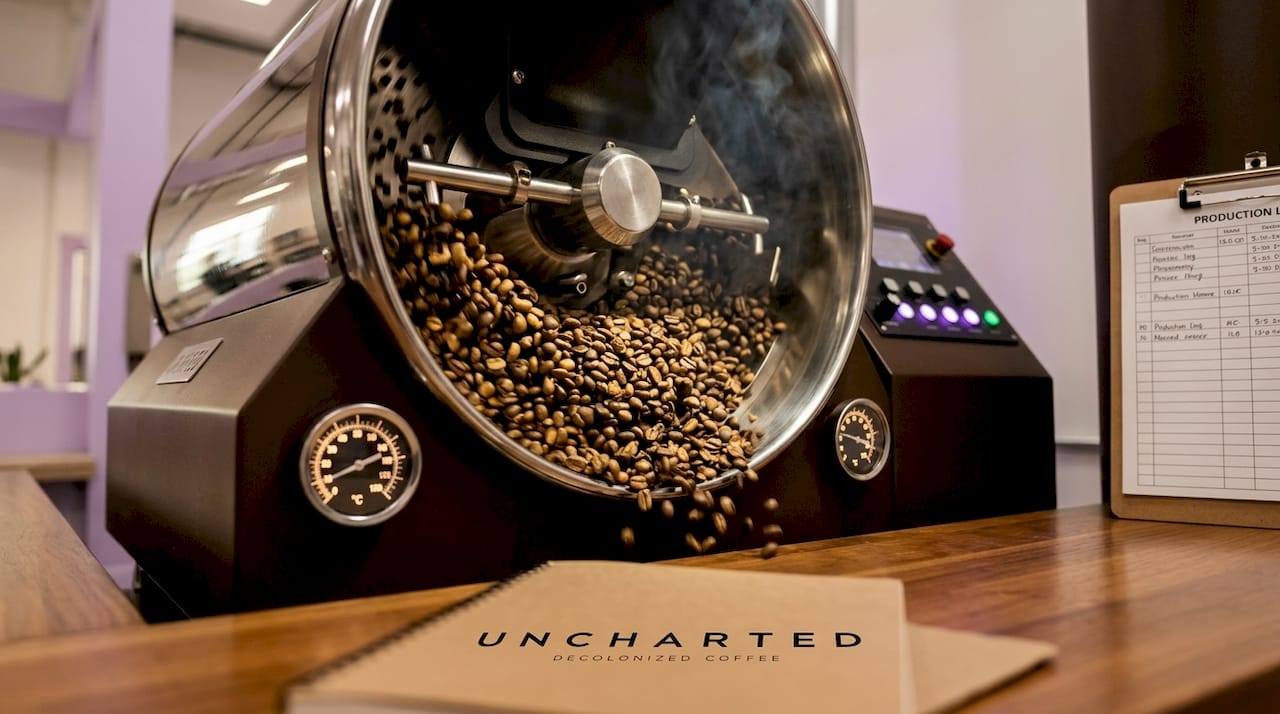
First crack is the audible signal that moisture has fully escaped the bean and cellular structure is expanding. The development time after first crack, typically 60 to 120 seconds in a small batch, determines how much of the bean’s origin character survives. Extending this phase too long erases acidity and floral notes. Cutting it short leaves the bean underdeveloped and grassy. Small batch roasting makes hitting this window repeatable.
| Roast Phase | Temperature Range | Key Chemical Changes |
|---|---|---|
| Drying phase | 200°F to 300°F | Moisture evaporation, green bean color fades |
| Maillard reaction | 300°F to 370°F | Pyrazines, furans, aldehydes form |
| First crack | 370°F to 400°F | Bean expands, CO₂ releases, acidity peaks |
| Development phase | 400°F to 430°F | Sweetness develops, body increases |
| Second crack | 430°F+ | Oils surface, roast character dominates |
Pro Tip: Track your development time ratio, which is development time divided by total roast time. Most specialty roasters target a ratio between 20% and 25% to preserve origin notes without underdevelopment.
Small batch roasting versus mass roasting: what actually differs
The core difference between small batch and mass roasting is not just quantity. It is control over heat flow and the ability to respond to what the beans are doing in real time. Large commercial roasters process hundreds of pounds per batch, and the thermal mass of that volume averages out temperature variation across the drum. Individual beans at the edges roast differently than those at the center, and the roaster has limited ability to correct this mid-batch.
Small batch roasting, by contrast, allows for even heat distribution and rapid airflow adjustment. Smaller batches roast faster, which makes fine-tuning easier and reduces the risk of roast defects like scorching or baking. Baked beans result from too much time at low heat, producing a flat, bread-like flavor. Scorched beans come from too much direct heat too quickly, creating harsh, ashy notes. Both defects are far more common in large batches where heat management is less precise.
| Factor | Small batch roasting | Mass roasting |
|---|---|---|
| Batch size | Under 5 lbs typical | Hundreds of pounds |
| Roast duration | ~10 minutes | ~16 minutes or more |
| Heat control | High, adjustable in real time | Limited mid-batch correction |
| Flavor consistency | High per-batch precision | Averaged across large volume |
| Origin character | Preserved | Often flattened |
| Flexibility | Roast-by-roast profile changes | Fixed commercial profiles |
| Defect risk | Lower with skilled roaster | Higher due to thermal mass |
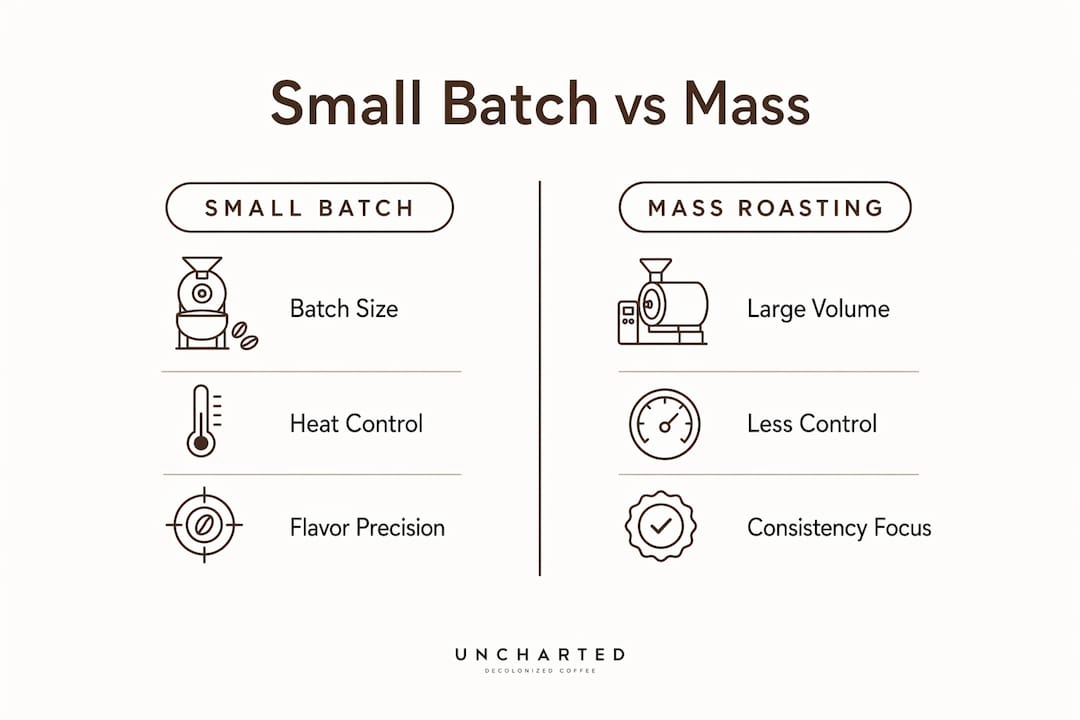
One important nuance: small batch roasting does not guarantee quality on its own. Skill, green bean quality, and equipment calibration all matter equally. A poorly managed small batch will still produce inferior coffee. The method creates the conditions for quality. The roaster must execute within them.
Pro Tip: When sourcing coffee, ask whether the roaster publishes roast dates rather than best-by dates. Roasters confident in their small batch process are typically transparent about freshness because they know it is a competitive advantage.
The small batch coffee process: equipment and steps
The practical small batch coffee process follows a consistent sequence regardless of equipment type. Understanding each step helps you recognize what separates a thoughtful roast from a rushed one.
- Load the green beans. Most small batch roasters work with 100 grams to 2 pounds of green coffee. Starting weight matters because beans lose 15% to 20% of their mass in moisture during roasting.
- Preheat the drum or chamber. Consistent starting temperature prevents the beans from sitting in a cold environment, which causes uneven drying and flavor defects.
- Monitor the drying phase. This phase takes roughly the first third of total roast time. Rushing it causes scorching. Extending it too long bakes the beans.
- Listen and watch for first crack. First crack sounds like popcorn popping. This is the roaster’s signal to begin timing the development phase precisely.
- Pull and cool immediately. Cooling stops the roast. Delayed cooling continues development and can push a light roast into medium territory unintentionally.
- Log every variable. Time, temperature, airflow, and sensory notes from each batch build a profile library for future replication.
Common small batch roaster types include air roasters like the Fresh Roast SR800, drum roasters like the Behmor 1600 Plus, and professional-grade machines like the Aillio Bullet R1. Each handles heat transfer differently. Air roasters use convection heat for clean, bright cups. Drum roasters combine conduction and convection for fuller body and more developed sweetness.
Helix Coffee in Breckenridge, Colorado, demonstrates what precision small batch roasting looks like at an advanced level. Roasting at altitude changes atmospheric pressure and lowers the boiling point of water inside the bean, requiring longer roast times at lower temperatures. Helix uses digital equipment to roast batches as small as 50 grams, making incremental adjustments to unlock distinct flavors that altitude and origin together create. This level of data-driven precision is only possible because the batch size is small enough to respond to.
Pro Tip: Avoid the common mistake of opening the roaster lid or chamber during the drying phase. Interrupting heat flow in the first three minutes causes uneven moisture release and produces a flat, papery flavor in the final cup.
How small batch roasting preserves origin flavor profiles
The benefits of small batch roasting are most visible in the cup’s aroma and finish. Origin character, the specific flavor notes tied to a bean’s growing region, soil, and processing method, survives or disappears based on how the roast is managed. Small batch precision is what keeps those notes alive.
Here is what careful small batch roasting preserves and why:
- Floral and fruity notes come from aldehydes and esters that form early in the roast and degrade quickly at high temperatures. A controlled small batch roast protects these compounds by avoiding excessive heat during the development phase.
- Acidity and brightness reflect the organic acids present in the green bean. Over-roasting destroys these acids. Small batch roasting allows the roaster to stop at the exact point where acidity is balanced rather than eliminated.
- Sweetness and body develop from caramelization reactions in the later roast stages. Precise development time in a small batch produces sweetness without pushing into bitter, roasty territory.
- Aroma clarity depends on the stability of volatile compounds after roasting. Beans roasted with precision retain more of their aromatic complexity because fewer VOCs are burned off through excessive heat exposure.
The specialty coffee principle at the core of small batch roasting is to honor the bean rather than erase it. A Yirgacheffe from Ethiopia carries jasmine and bergamot notes. A Huila from Colombia carries dark cherry and caramel. Mass roasting tends to flatten these distinctions into a generic roasted profile. Small batch roasting, done well, lets each origin speak clearly.
For home enthusiasts, recognizing a well-developed small batch roast is straightforward. The aroma from freshly ground beans should be complex and layered, not one-dimensional. The color should be even across all beans with no visible scorching or pale patches. The cup should have a clean finish with no harsh bitterness lingering after you swallow.
Understanding bean origin’s role in flavor helps connect what the roaster preserves to what you actually taste. The roasting process does not create origin character. It either protects it or destroys it.
Key takeaways
Small batch roasting produces superior flavor because it gives roasters precise control over the chemical reactions that determine aroma, acidity, sweetness, and origin character in every cup.
| Point | Details |
|---|---|
| Batch size controls chemistry | Smaller batches roast in ~10 minutes, enabling tighter management of the Maillard reaction and development phase. |
| First crack is the critical window | Development time after first crack directly determines acidity, sweetness, and how much origin character survives. |
| Small batch versus mass roasting | Large batches average out heat distribution, flattening unique bean notes that small batch precision preserves. |
| Equipment and skill both matter | Small batch methods create conditions for quality, but roaster skill and green bean quality determine the final result. |
| Origin character is the goal | The specialty coffee standard is to preserve what the bean already carries, not to impose a generic roasted flavor. |
What I’ve learned from paying attention to the roast
I used to think the difference between good and great coffee lived in the brewing method. Grind size, water temperature, pour rate. Then I started paying closer attention to roast dates and batch sizes, and the gap became impossible to ignore.
What strikes me most about small batch roasting is that it rewards attention. You cannot automate your way to a great roast. The roaster who logs every batch, listens for first crack, and adjusts airflow based on how the beans smell at minute seven is doing something that no large-scale operation can replicate at volume. That is not nostalgia for craft. It is thermodynamics.
The small batch ethos that resonates with me most is the idea of honoring individual beans. A coffee grown at 1,800 meters in a specific microclimate carries a story in its chemistry. Over-roasting that bean is not just a flavor mistake. It is a waste of everything that went into producing it.
For home enthusiasts, I genuinely believe starting with small batch roasted coffee before attempting to roast yourself is the right sequence. Taste what precision looks like first. Then you will know what you are trying to replicate when you load your first batch into a Fresh Roast or an Aillio Bullet.
The one warning I would offer: do not let digital controls replace sensory awareness. Roast logging software like Cropster or Artisan is genuinely useful for replication. But the roasters who produce the most interesting cups are the ones who still trust their nose at minute eight.
— Jasmine
Experience small batch roasting from Uncharted Coffee
Uncharted Coffee roasts every batch with the same intention behind this article: to preserve what the bean carries and deliver it clearly to your cup. The focus is not volume. It is the kind of attention that makes a Tuesday morning feel different.

If you want to taste the difference that small batch precision makes, explore Uncharted Coffee’s selections and find a roast that matches how you want to start your day. For something genuinely rare, the limited release offerings showcase single-origin beans roasted in small quantities specifically to highlight their origin character. Each one is a direct expression of why this process matters.
FAQ
What is small batch roasting in simple terms?
Small batch roasting is the practice of roasting a limited quantity of coffee beans at one time, typically under five pounds, to maintain precise control over heat and timing. This control directly improves flavor quality and preserves the bean’s origin character.
How does small batch roasting improve flavor?
Small batches roast in approximately 10 minutes, giving the roaster tight control over the development phase after first crack where acidity, sweetness, and aroma compounds are finalized. Roasting produces over 900 VOCs, and small batch precision protects the most desirable ones from being destroyed by excess heat.
What equipment do small batch roasters use?
Common small batch roasters include air roasters like the Fresh Roast SR800, drum roasters like the Behmor 1600 Plus, and professional machines like the Aillio Bullet R1. Advanced operations like Helix Coffee use digital systems to track temperature, airflow, and timing down to 50-gram test batches.
Does small batch roasting guarantee better coffee?
Small batch roasting creates the conditions for better coffee, but it does not guarantee quality on its own. Green bean quality, roaster skill, and equipment calibration all contribute equally to the final result.
How is small batch roasting different from mass roasting?
Mass roasting averages heat across large volumes, which flattens individual bean characteristics and increases the risk of defects like scorching or baking. Small batch roasting allows real-time adjustments to heat and airflow, preserving origin flavor notes that large-scale methods typically erase.
Recommended
- Bean Origin’s Role in Espresso Flavor Explained – Uncharted Coffee Supply
- Espresso Extraction Explained for Serious Coffee Lovers – Uncharted Coffee Supply
- What Is Specialty Coffee Explained for True Enthusiasts – Uncharted Coffee Supply
- What Does Coffee Processing Mean for Your Cup? – Uncharted Coffee Supply